

According to a study, 14.8% of manufacturing companies in Turkey operate under a contract manufacturing model. In solid dosage forms (tablets, capsules, sachets), this rate has increased significantly over the past five years; establishing an in-house production line requires an investment of millions of lira for a GMP-compliant facility and a licensing process that can take years.
Contract solid dosage form manufacturing involves a pharmaceutical, dietary supplement, or cosmetics company outsourcing its solid dosage forms to a specialized contract manufacturing organization (CMO). The CMO undertakes the entire technical process, from formulation support to packaging. The brand owner, on the other hand, focuses on its core competencies such as marketing, sales, and regulatory submissions.
Why are B2B decision-makers turning to this model? The key reasons can be summarized as follows:
As of 2026, Türkiye’s strategic logistics position and skilled workforce are creating a regional hub for contract solid dosage form manufacturing. Demand for CMO services from both domestic and international brands is on the rise, particularly in the dietary supplement and medical nutrition segments.
In this guide, we cover all critical topics, from the types of solid dosage forms that can be contract manufactured to technical production stages, from GMP requirements to the TITCK licensing process, and the criteria for selecting the right manufacturing partner.
In contract solid dosage form manufacturing, more than seven dosage forms can be produced, including tablets, capsules, sachets, lozenges, pellets, and ODF; the form selection is determined based on the characteristics of the active ingredient and the target market.
The production parameters for a vitamin C tablet for a dietary supplement brand and a sublingual nitroglycerin tablet for a pharmaceutical company are entirely different. The stability of the active ingredient, its bioavailability, and patient compliance are the three key variables that determine the dosage form. The table below comparatively presents the most common solid dosage forms in contract manufacturing.
| Solid Dosage Form Type | Advantages | Disadvantages | Suitable Applications | Example Products |
|---|---|---|---|---|
| Film-Coated Tablet | Taste/odor masking, controlled release capability | Coating stage extends production time | Pharmaceuticals, dietary supplements | Multivitamins, paracetamol |
| Effervescent Tablet | Fast dissolution, high patient compliance | Sensitive to moisture, requires special packaging | Dietary supplements, medical nutrition | Vitamin C, magnesium |
| Hard Gelatin Capsule | Suitable for powder and granule filling, easy to swallow | Gelatin source (animal-based) is not suitable for vegan consumers | Pharmaceuticals, dietary supplements | Omega-3 powder, probiotics |
| Vegetarian (HPMC) Capsule | Vegan-friendly, low moisture absorption | Unit cost is 15–25% higher compared to hard gelatin | Herbal supplements, halal/kosher segment | Curcumin, herbal extracts |
| Powder Sachet | Flexible dosing, suitable for children | Filling accuracy decreases with poor-flowing powders | Dietary supplements, medical nutrition | Electrolyte powder, protein |
| Granule Sachet | Better flow than powder, uniform distribution | Granulation step creates additional cost | Pharmaceuticals, dietary supplements | Paracetamol granules, mucilage |
| Chewable Tablet | Ideal for children and elderly patients with medication aversion | Taste masking formulation is complex | Pediatric pharmaceuticals, dietary supplements | Calcium, vitamin D |
The selection of dosage form is not only a technical decision but also a commercial strategy. While effervescent tablets offer a premium positioning in terms of shelf visibility and consumer perception, powder sachets stand out in price-sensitive markets due to their lower production cost.
Among tablet types, sublingual tablets aim for direct absorption of the active ingredient through the mucosa and represent a niche segment in the pharmaceutical industry. The compression force used in the Tablet Compression process, as well as tablet hardness and friability values, must be optimized separately for each form. In chewable tablets, compression parameters are kept low; the tablet must easily disintegrate in the mouth.
On the capsule side, soft gelatin capsules are suitable for liquid and semi-solid filling and are typically preferred for oil-based formulations (such as fish oil and vitamin E). The investment required for a soft gelatin production line is significantly higher than that for hard capsules; therefore, outsourcing under a contract manufacturing model is a particularly logical step.
In recent years, stick-pack granule sachets have been rapidly gaining popularity due to their convenience. ODF (orodispersible film), on the other hand, is a dosage form that can currently be manufactured by only a limited number of CMOs in Turkey, yet it holds strong growth potential in the pediatric and geriatric segments. Pellet technology is also used to provide controlled release in multiparticulate systems.
To determine the right dosage form, three questions must be answered:
The solid dosage form manufacturing process consists of eight key stages, from formulation development to packaging; the selection of the granulation method directly determines product stability.
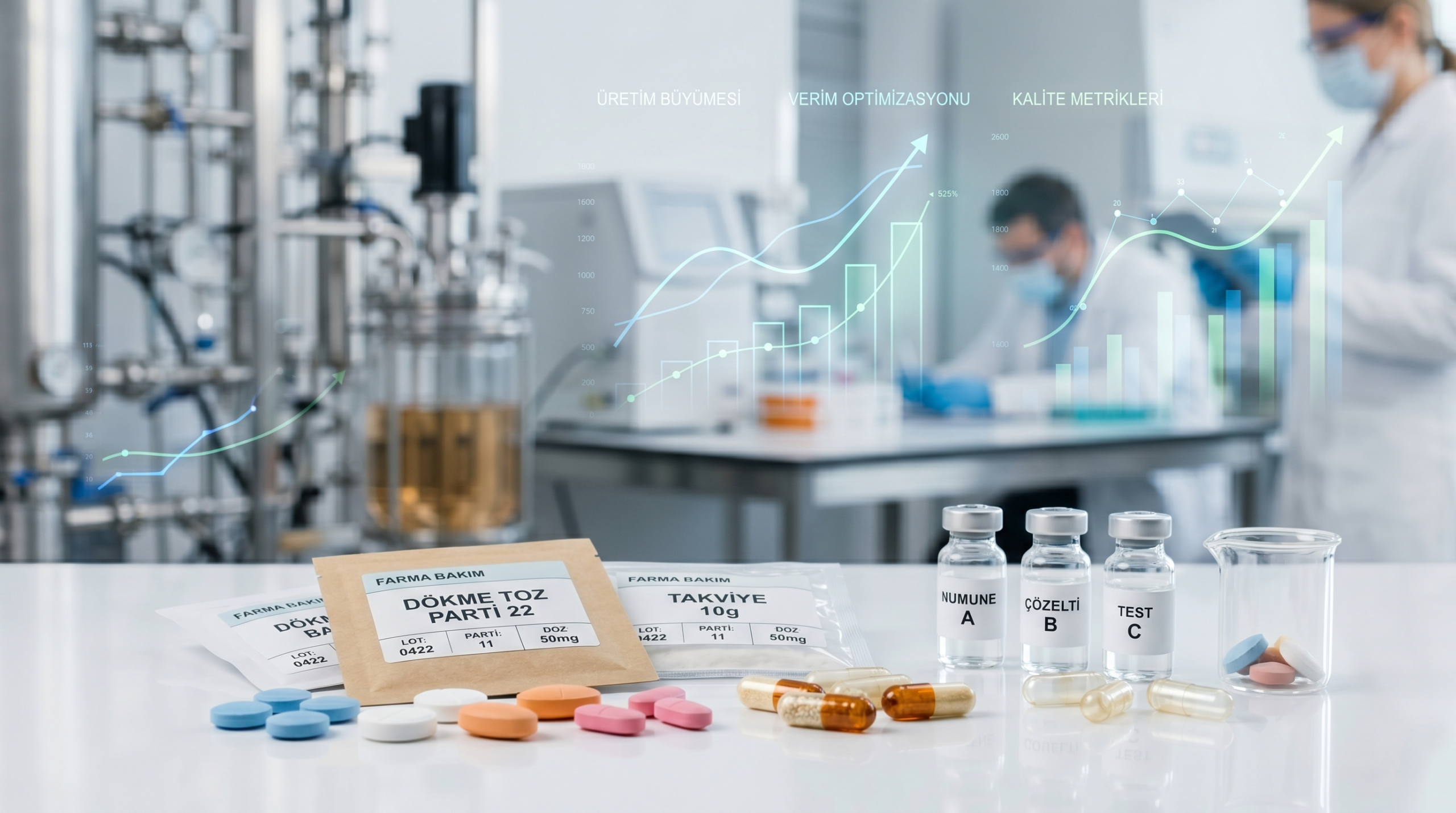
When a manufacturing request is submitted to a CMO, the process does not begin with an Excel spreadsheet at a desk, but with pre-formulation studies in the laboratory. The physicochemical profile of the active ingredient (particle size, crystal form, moisture content, flow properties) shapes the parameters of all subsequent stages.
During the formulation development stage, the R&D team tests the compatibility of the active ingredient with excipients (binders, lubricants, disintegrants, fillers). Pre-formulation studies typically take 2–6 weeks; this duration varies depending on the complexity of the active ingredient and the targeted release profile.
During raw material weighing and blending, each component is weighed on calibrated precision scales and recorded in the batch record. The blending time and speed are verified through homogeneity tests. Blending for 15–20 minutes in a V-type or double-cone mixer typically achieves over 98% homogeneity; this duration may double for cohesive powders.
The granulation stage is the most critical decision point in solid dosage form manufacturing. There are three main methods:
The selection of the granulation method directly affects product stability. Applying wet granulation to a moisture-sensitive active ingredient may lead to an increase in degradation products in accelerated stability tests. The formulation team should not finalize the granulation decision without stability data.

In this process, rotary tablet presses can produce between 50,000 and 500,000 tablets per hour. Compression force (typically between 5–40 kN), tablet weight, hardness (40–100 N), friability (<1%), and disintegration time are measured as in-process control parameters for each batch. Issues such as capping or laminating during compression are usually caused by insufficient binder content or excessive air entrapment.

In this process, tablets rotate within a perforated coating pan while a polymer-based coating solution is sprayed onto them. The coating thickness typically ranges between 20–100 microns. Although sugar coating is an older technique, it is still used in chewable tablets for taste masking purposes.

In this process, automatic machines can fill between 25,000 and 120,000 capsules per hour. Dosage accuracy is maintained within a ±3% tolerance, which is an acceptable limit according to pharmacopoeial standards. In sachet filling lines, powder or granules are transferred into pouches using volumetric or gravimetric dosing systems.
This process is considered in two layers. Primary packaging (blister, bottle, sachet pouch) comes into direct contact with the product, and its barrier properties (moisture permeability, oxygen permeability) affect stability. Secondary packaging (carton box, leaflet, collective box) fulfills logistical and regulatory requirements.
In-process controls (IPC) conducted at each stage verify the batch’s compliance with specifications in real time. Weighing accuracy, tablet weight variation, capsule fill weight, and coating uniformity are sampled and tested at defined intervals during production. These controls minimize the risk of batch rejection and prevent unexpected results in final product analysis.
GMP certification is a legal requirement in contract solid dosage form manufacturing and is audited under two main standards: EU-GMP and WHO-GMP.
When evaluating a contract manufacturing partner, the first document to review is the GMP certificate. Manufacturing in a non-certified facility not only poses legal risks but also exposes the brand to product recalls, market loss, and potentially irreversible reputational damage. In Turkey, the GMP compliance certificate issued by TITCK demonstrates that the manufacturing facility has successfully passed periodic inspections.
The difference between EU-GMP and WHO-GMP directly impacts your export targets in practice. EU-GMP is mandatory for entry into the European Union market and is mutually recognized by PIC/S (Pharmaceutical Inspection Co-operation Scheme) member countries. WHO-GMP, on the other hand, is widely accepted in the Middle East, Africa, and Southeast Asia markets. The same facility may hold both certifications; however, EU-GMP inspections examine data integrity and cross-contamination controls in much greater detail.
The tests applied for each batch in the quality control laboratory are as follows:
Stability studies are the most critical source of data for determining a product’s shelf life. Accelerated stability conditions (40°C / 75% relative humidity, 6 months) and long-term stability conditions (25°C / 60% relative humidity, 12–36 months) are conducted in accordance with the ICH Q1A guideline. The results of these tests form the scientific basis for the expiration date stated on the label.
CAPA (Corrective and Preventive Actions) processes are initiated when a deviation is detected during production. If tablet hardness falls outside specification in a batch, a root cause analysis is conducted, corrective actions are implemented, and preventive measures are documented. One of the most frequently scrutinized areas during GMP inspections is the consistency of CAPA records.
Manufacturing in a facility without GMP certification entails both legal risk and reputational damage. In Turkey, TITCK has the authority to impose production suspension and administrative fines on non-certified facilities.
Environmental conditions are also an integral part of quality assurance. In solid dosage form production areas, temperature is maintained between 18–25°C and relative humidity between 30–65%. Cleanroom classification (typically Grade D) defines particle and microbiological limits. Positive pressure differentials prevent contamination from entering the environment. Continuous 24/7 monitoring of these parameters, along with automated alarm systems in case of deviations, is a standard infrastructure in modern GMP facilities.
Batch records document who performed each production step, when it was carried out, and under which parameters. Traceability enables retrospective tracking of every stage, from raw materials to the finished product. In the event of a product recall, it is impossible to identify the affected products without batch records.
TITCK is responsible for the licensing of pharmaceuticals and medical devices in Turkey, while dietary supplements are subject to notification to the Ministry of Agriculture and Forestry.
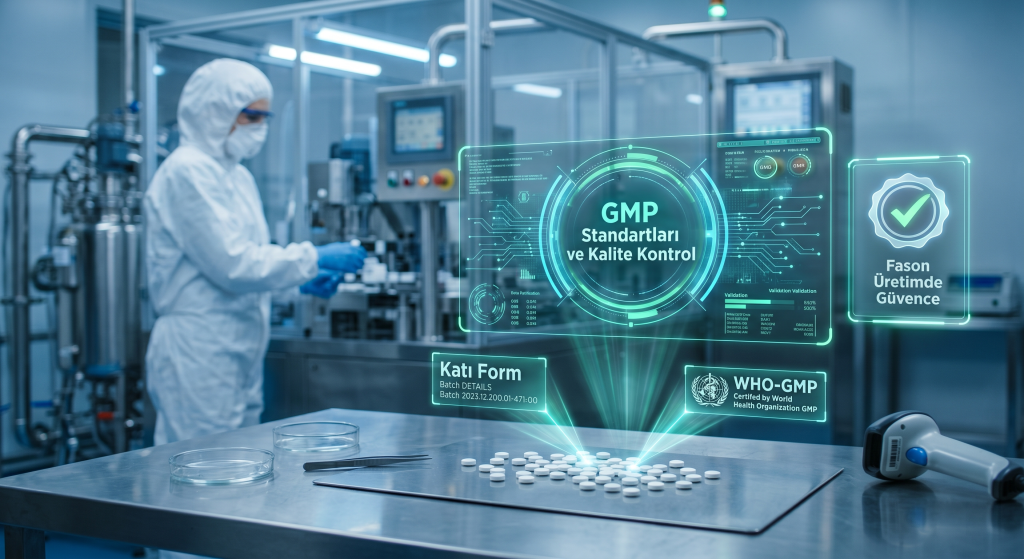
In contract solid dosage form manufacturing, the regulatory process follows entirely different pathways depending on the product category. Obtaining a pharmaceutical license requires comprehensive dossier preparation in CTD (Common Technical Document) format, whereas the notification process for dietary supplements is much shorter. Failing to clearly understand this distinction before selecting a CMO can lead to delays lasting several months.
In the pharmaceutical licensing process, the CTD dossier submitted to TITCK consists of five modules: regional administrative information (Module 1), quality overall summary (Module 2), quality data (Module 3), non-clinical studies (Module 4), and clinical studies (Module 5). For generic drugs, Modules 4 and 5 may be partially exempt; however, a bioequivalence study is mandatory. The dossier evaluation process is typically completed within 180–210 days; in the case of missing documentation, this period can easily double.
For dietary supplements, the notification submitted to the Ministry of Agriculture and Forestry includes the product formulation, label draft, and certificate of analysis. Approval of the notification is typically completed within 30–60 days. With the updated Turkish Food Codex Communiqué on Dietary Supplements introduced in 2024, stricter regulations have been implemented regarding permitted vitamin/mineral dosages and health claims. As of 2026, formulations that do not comply with this communiqué face the risk of being withdrawn from the market.
The common recommendation is to develop the product first and then initiate the regulatory submission process. In practice, the opposite approach is more efficient; integrating regulatory requirements during the formulation stage significantly reduces the risk of dossier rejection and the cost of reformulation. Even labeling regulations (font size, mandatory warning statements, claim order) indirectly affect the formulation.
A manufacturing site authorization is a prerequisite for both pharmaceutical and dietary supplement production. TITCK inspectors conduct on-site inspections of the facility, reviewing aspects such as equipment calibration, cleanroom conditions, personnel training records, and water system validation. Commercial production cannot begin without receiving a “compliant” inspection report.
The allocation of responsibilities between the contract manufacturer and the marketing authorization holder is defined by contract. The marketing authorization holder bears ultimate responsibility for product safety in the market and adverse event reporting (pharmacovigilance). The CMO, on the other hand, is responsible for manufacturing quality, batch records, and GMP compliance. If this division of responsibilities is not clearly defined, both parties may face legal issues in the event of a product recall.
“Contract manufacturing of human medicinal products is carried out under the responsibility of the marketing authorization holder and in facilities that hold a manufacturing site authorization.” (Regulation on the Manufacture of Human Medicinal Products, Article 5)
In terms of labeling, even providing consumer tools such as body mass index (BMI) calculators by brands operating in the healthcare sector requires that claims remain within regulatory limits. As of 2026, TITCK has also included health claims on digital platforms within its scope of inspection; therefore, label and digital content compliance must be planned together.
In contract manufacturing, the formulation remains the property of the client and intellectual property is protected, whereas in private label manufacturing, the manufacturer’s ready-made formulation is labeled under the client’s brand.
Confusing these two models is a common mistake among companies new to the industry. In the contract manufacturing model, the company provides the manufacturer with a formulation developed by its own R&D team, and the manufacturer only carries out the production process. In the private label model, the manufacturer offers one of its existing formulations from its portfolio, and the customer markets this product under its own brand.
The difference is significant in terms of intellectual property. In contract manufacturing, the formulation is protected by an NDA (non-disclosure agreement), and the manufacturer cannot offer this formulation to another client. In the private label model, the formulation remains in the manufacturer’s portfolio; therefore, the same product can be sold under different brands. This is a critical distinction for companies seeking market differentiation.
The cost structure also varies depending on the model. Contract manufacturing requires R&D investment, resulting in higher initial costs; however, unit costs decrease over time and margins increase. In private label manufacturing, R&D costs are minimal, time-to-market is shorter, but product uniqueness remains limited.
| Criteria | Contract Manufacturing (CMO) | Private Label Manufacturing |
|---|---|---|
| Formulation Ownership | Owned by the client, protected by NDA | Remains in the manufacturer’s portfolio |
| R&D Process | Managed by the client, CMO may provide support | No R&D required, ready formulation is selected |
| Cost Structure | High initial cost, low unit cost (at scale) | Low initial cost, fixed unit cost |
| Minimum Order Quantity | Typically 50,000+ units (depending on form) | Can start with 10,000–25,000 units |
| Brand Control | Full control: packaging, dosage, formulation | Limited: only label and packaging design |
| Time to Market | 3–6 months (formulation + production + licensing) | 4–8 weeks (ready formulation + labeling) |
| Intellectual Property | Owned by the client, legally protected | Owned by the manufacturer, shared use possible |
Companies with in-house R&D capabilities, a focus on market differentiation, and a long-term brand strategy benefit from contract manufacturing. For brands aiming for rapid product launches, seeking to build a broad SKU portfolio, or operating with limited R&D budgets, private label is a more pragmatic starting point. Many companies use both models in parallel: they produce their core products through contract manufacturing while expanding complementary product lines through private label.
In selecting a contract manufacturing partner, certification history, reference client portfolio, and R&D support capacity are the three most decisive criteria.

Selecting the wrong CMO leads to a chain of issues, from formulation delays to licensing rejections. A common pitfall for decision-makers is focusing solely on unit price. If a low-cost manufacturer causes batch rejection due to inadequate quality control infrastructure, the total cost can escalate significantly.
In the initial evaluation, request the manufacturer’s inspection history. The number of inspections over the past three years, the number of critical findings, and the timelines for corrective actions provide more insight than the certificate itself. A manufacturer may hold an EU-GMP certificate; however, if it received 12 critical findings in the most recent inspection, this is a serious warning sign.
In evaluating production capacity, looking solely at the number of machines is insufficient. Shift structure, line changeover times, and seasonal utilization rates determine actual capacity. The annual output difference between a facility operating three shifts and one operating a single shift with the same machinery can be as much as threefold.
In terms of R&D and formulation support, the key consideration is not merely the existence of an R&D team, but its mastery of regulatory requirements such as nutritional reference values and its experience in stability studies. A CMO that provides formulation support can identify active ingredient–excipient incompatibilities at the pilot stage, preventing unexpected costs during commercial production.
Do not sign an agreement without clearly defining the pricing model. A fixed unit price model provides budget predictability, while tiered pricing offers cost advantages at higher volumes. Some manufacturers invoice formulation development separately, while others incorporate it into the unit price. Comparing proposals without understanding this difference can lead to misleading conclusions.
The most practical way to assess a CMO’s communication quality is its response time during the quotation process. It is not realistic to expect a manufacturer that delays 10 days at the quotation stage to be faster during the production process.
CMO Evaluation Checklist:
10. Is a project manager assigned, and are communication channels and reporting frequency clearly defined?
In contract manufacturing of solid dosage forms, the total timeline from formulation to shipment typically ranges between 3–6 months; effervescent tablets require the longest formulation period.
Many companies approach a CMO with the expectation of launching a product within two months. In reality, formulation development alone can take 4–12 weeks; this timeframe does not include licensing. Setting the right expectations is fundamental to effective supply chain planning.
The time difference between pilot production and commercial production arises from the complexity of scale-up parameters. While pilot batches are produced using 5–10 kg of raw materials, commercial production involves batches of hundreds of kilograms. Granulation, compression force, and coating parameters must be re-optimized at each scale. If this step is skipped, tablet hardness values or capsule fill weight deviations may fall outside specifications.
| Solid Dosage Form Type | Average Formulation Time | Pilot Production Time | Commercial Production Time | Typical MOQ Range |
|---|---|---|---|---|
| Tablet | 4–8 weeks | 2–3 weeks | 3–6 weeks | 50,000–100,000 units |
| Capsule | 3–6 weeks | 2–3 weeks | 3–5 weeks | 25,000–100,000 units |
| Sachet | 3–5 weeks | 1–2 weeks | 2–4 weeks | 10,000–50,000 units |
| Effervescent Tablet | 6–12 weeks | 3–4 weeks | 4–8 weeks | 30,000–75,000 units |
The longer formulation time of effervescent tablets is not coincidental. Moisture sensitivity, acid–base reaction balance, and taste masking requirements necessitate iterative testing cycles. It is the exception for a formulation to be stable on the first attempt.
Among the factors affecting capacity, shift structure and line changeover frequency are as decisive as the machinery itself. A facility that switches between tablet compression and capsule filling on the same line spends 4–8 hours on cleaning and calibration with each changeover. Dedicated lines for a single product eliminate this loss; however, the cost implications differ.
Seasonality should not be overlooked. Demand for dietary supplements increases during the autumn months, leading to higher capacity utilization at CMOs. Placing orders during relatively quieter periods such as January–February can provide advantages in both production timelines and pricing.

MOQ varies depending on the dosage form and the manufacturer’s line capacity. Typical industry ranges are 50,000–100,000 units for tablets, 25,000–100,000 units for capsules, and 10,000–50,000 units for sachets. For pilot batches, some manufacturers may go below these quantities; however, the unit cost increases significantly.
In the contract manufacturing model, the formulation belongs to the client. An NDA is signed to prevent the manufacturer from sharing this formulation with third parties. In the private label model, the formulation remains in the manufacturer’s portfolio and can be offered to multiple brands.
The total timeline from formulation development to commercial shipment ranges between 3–6 months. The formulation stage may take 4–12 weeks, pilot production 2–4 weeks, and commercial production 3–8 weeks. This timeline does not include the licensing process; pharmaceutical licensing adds an additional 6–12 months, while dietary supplement notification adds 2–4 weeks.
A manufacturing site authorization, product-specific marketing authorization, and a written agreement between the contract manufacturer and the marketing authorization holder are mandatory. For dietary supplements, a notification must be submitted to the Ministry of Agriculture and Forestry. The agreement should clearly define the responsibilities of the parties, quality control obligations, and sample retention conditions.
No. Manufacturing in a non-certified facility is illegal and directly entails the risk of product recalls.
Certification history and inspection findings, reference client portfolio, R&D support capacity, MOQ flexibility, and communication quality are the key evaluation criteria. Making a final decision without visiting the facility and producing at least one pilot batch is risky. A pilot batch is the most reliable way to concretely assess the manufacturer’s quality control discipline and process management capabilities.
In the process extending from formulation development to commercial production, the right manufacturing partner minimizes time and cost losses. Providing production support in solid dosage forms since 2003, Bereket İlaç ve Kozmetik offers high-capacity Solid Dosage Form Manufacturing services in tablet compression, capsule filling, and effervescent tablet lines. Contact the Bereket team to evaluate your project.
Contact Us